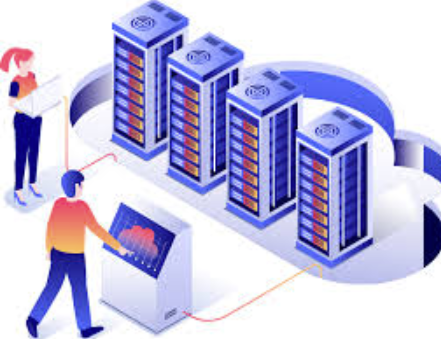
Cloud data centers in 2026 emphasize modular, scalable infrastructure with dense, energy-efficient compute and automated management. Edge microservices enable localized processing under central orchestration, while quantum networking offers ultra-secure, low-latency links. Hyperscale capacity, edge distribution, and AI orchestration converge into policy-driven lifecycle management and regional hubs. Security, compliance, and traceability drive architecture with interoperable interfaces and continuous validation. The result is faster delivery and measurable cost control, but ongoing tradeoffs require closer scrutiny.
What Cloud Data Centers Look Like in 2026
Cloud data centers in 2026 are defined by modular, scalable infrastructure that blends high-density compute, energy efficiency, and automated management.
They prioritize edge microservices deployment, enabling localized processing while preserving central orchestration.
Quantum networking emerges as a strategic layer for secure, ultra-low-latency links.
The layout emphasizes modular racks, standardized interfaces, and data-centric resilience, granting operators the freedom to innovate without architectural constraints.
How Hyperscale, Edge, and AI Drive Efficiency
Hyperscale, edge, and AI converge to maximize efficiency through architectural separation of scope and scale: centralized orchestration and regional hubs coordinate vast compute pools, while localized edge nodes optimize latency-sensitive workloads.
The approach enables hyperscale efficiency via modular pools and policy-driven lifecycle management, while edge AI workloads benefit from locality, data provenance, and real-time orchestration, driving cost-effective, scalable, and resilient infrastructure.
Evaluating Multi-Cloud Security and Compliance
Evaluating multi-cloud security and compliance requires a structured, architecture-driven view that maps controls, data flows, and policy enforcement across disparate provider environments. The approach emphasizes defensible boundaries, continuous validation, and interoperable interfaces. Security auditing and policy governance become core artifacts, enabling traceability, risk scoring, and evidence-based decisions while preserving freedom to optimize workloads within compliant, heterogeneous landscapes.
Building for Speed, Resilience, and Cost Control
How can organizations accelerate delivery while preserving resilience and controlling costs in modern data-center architectures? Architectural patterns emphasize modular, scalable components, decoupled services, and buffer-aware orchestration. Speed benchmarks frame performance targets, while resilience economics guides investment by balancing redundancy and utilization. The result is a lean, auditable stack aligned with freedom-driven governance, delivering predictable outcomes without sacrificing reliability or cost discipline.
Frequently Asked Questions
How Do Data Center Carbon Footprints Compare Across Regions?
Data center emissions vary by region, reflecting regional energy mix complexities. The analysis reveals that areas with cleaner regional energy mixes exhibit lower emissions, while high-carbon grids elevate footprints; efficiency gains depend on scalable, architecture-first optimization and policy alignment.
What Are the Latest Standards for Data Sovereignty Compliance?
Latest standards emphasize data sovereignty and cross border compliance, mandating data localization where required, with clear jurisdictional controls; architectures must enable lawful data flows, enforce regional retention, and balance freedom to innovate against regulatory constraints under evolving data sovereignty mandates.
Which AI Workloads Most Impact Cooling and Power Use?
Lightning bolt of insight: ai workloads drive the most cooling and power impact. The analysis focuses on compute density, memory footprints, and orchestration, highlighting cooling optimization requirements for dense AI inference and training clusters in modern data centers.
How Can Vendors Ensure Supply Chain Transparency?
To ensure supply chain transparency, vendors implement verifiable tracking, auditing, and standardized data sharing. This enables supply chain traceability and vendor transparency, reduces risk, and supports architecture-focused, data-centric decision-making for freedom-driven stakeholders.
See also: letsbuildups
What’s the Role of Quantum-Ready Infrastructure Today?
A quantum-ready infrastructure today centers on scalable quantum-ready networking and robust qubit integration challenges, enabling flexible architectures. It emphasizes modularity, data-centric decisioning, and freedom-oriented design, with focus on interoperability, security, and gradual, architecture-driven adoption strategies.
Conclusion
In 2026, cloud data centers resemble a humming atlas: modular blocks aligned like vertebrae, powering edges with measured precision. Hyperscale corridors converge with AI-fueled orchestration, while quantum-knit links whisper security in the margins. Governance operates as a quiet compass—privacy, compliance, traceability—carved into interfaces and pipelines. The architecture endures as a data-centric machine: resilient, cost-aware, and rapidly adaptable, guiding regional hubs toward a balanced, scalable future that echoes through every validated, automated decision.